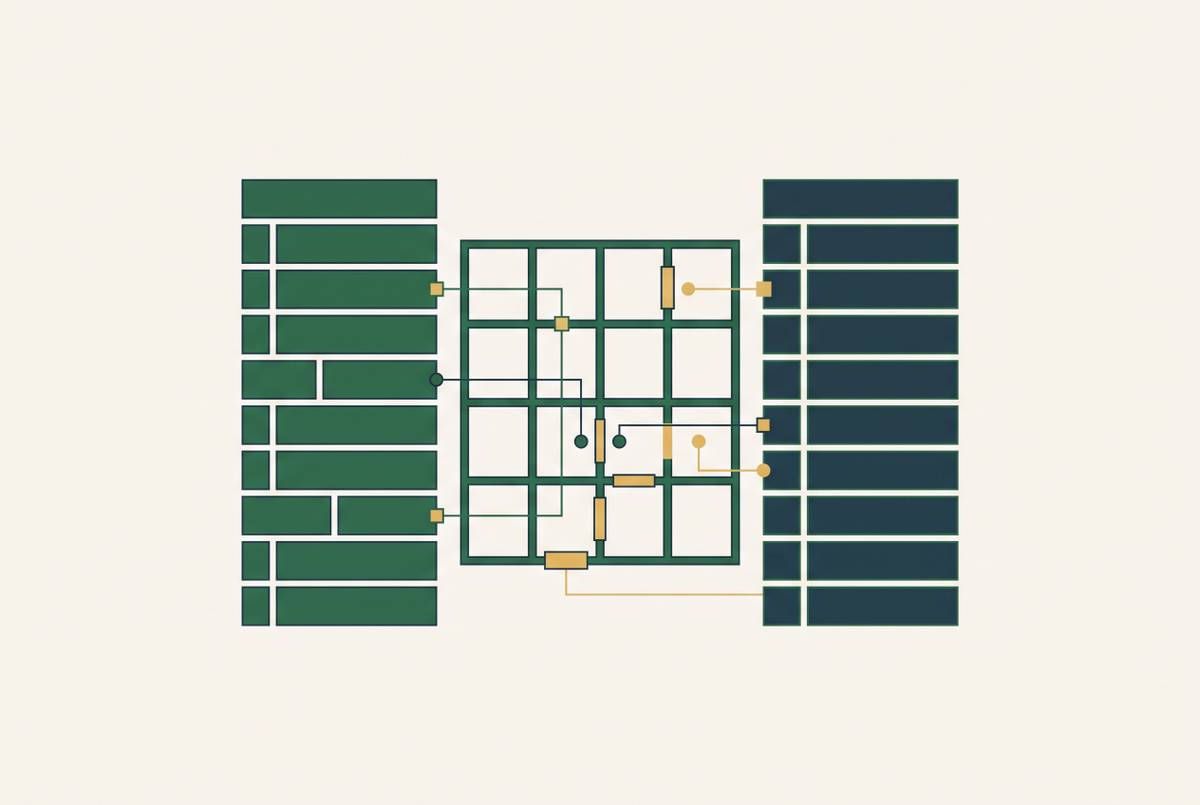
The Change Order Lifecycle That Starts With a Door Schedule Omission and How Estimators Break It Before Bid Submission
Catching door omissions before bidding prevents costly post-award change orders.
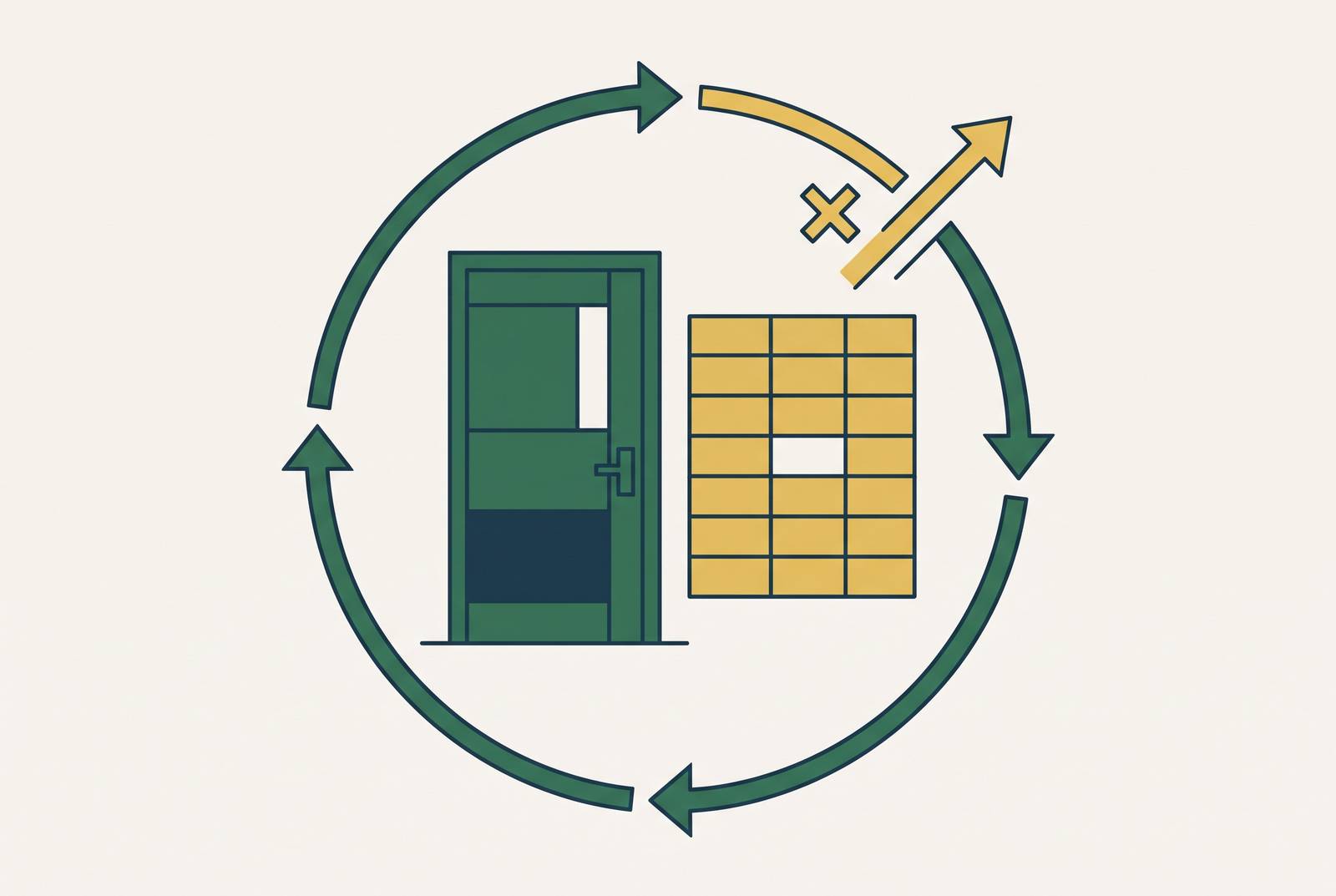
Catching door schedule omissions before bid submission requires reconciling every opening across the schedule, hardware sets, specifications, floor plans, and electrical drawings. An opening matrix keeps requirements that have been confirmed apart from conflicts, assumptions, and RFI items. This breaks the change order lifecycle before a missing requirement becomes an unqualified scope commitment and a post-award cost.
Why a door schedule omission rarely surfaces at bid and almost always surfaces at construction
The door schedule sits on the architectural drawings, while the specification that governs its entries sits elsewhere. Its rows identify door number, size, material, frame material, fire rating, glazing requirements, and assigned hardware group number. That arrangement divides the information needed to price an opening. A row can thus look complete even when the requirement it points to has missing or conflicting details.
The hardware group number is a reference. Groups such as HW-1, HW-2, and HW-3 are defined in the specification. A fire-rated stairwell group may require bearing hinges, a mortise lockset, a closer with backcheck, an automatic door bottom, smoke gaskets, an intumescent seal, and a kick plate. The schedule row itself need not list any of these items. Reading that row establishes the assignment, but not whether the assigned package suits the opening.
Electrical drawings introduce another layer of separation. Division 26 and 28 may show power supplies without raceways, or identify wiring without clearly assigning device supply. An electrified opening can then look fully specified in the architectural, hardware, and electrical documents even though those documents leave gaps in what is needed to install it. The weakness is structural. Unless someone connects those documents at the opening level, the gap simply travels forward.
The chain of events that carries an undetected omission from bid through award to construction
A conflict first becomes commercial exposure when it enters the bid as an unresolved assumption. Ontario Commercial Doors identifies the estimator’s choices as carrying an assumption, qualifying the submission, or requesting clarification. When no RFI resolves the conflict and the assumption goes unqualified, it becomes a scope commitment the contract enforces. Submission establishes a price while the underlying technical question remains unresolved.
After award, the distributor prepares the detailed hardware submittal. Each group now lists the hardware items for its doors, including manufacturer, model, finish, function, and deviations. That detail exposes conflicts between the specification and the proposed package that were not apparent during pricing. By the time these conflicts come to light, the contract price is set. The missing requirement must now be dealt with as a post-award correction, after the chance to price it in the bid has passed.
The cost basis changes with that timing. Work added after award is priced at contractor change order rates rather than the distributor rates available for the original package. Markup compounds a cost the bid did not contain. The Volpe Center’s January 2025 report identifies errors and omissions in design and contract documents as one of several technical causes of construction change orders, without identifying any single cause as primary.
The correction can then disrupt the occupancy schedule because doors are a critical path item. Frame re-fabrication, a different hardware prep, or a conduit rough-in that was not stubbed consumes procurement time. Standard items may ship within days, while specialty items may take several weeks. The owner receives an unexpected cost after mobilization rather than a requested scope enhancement, creating the conditions for an adversarial change order. Each downstream consequence begins with a requirement that could have been exposed before submission.
The omission categories that account for most Division 8 change orders and where in the document set they hide
Electrified hardware omissions commonly concern the power path. A frame that will have an electric strike, mag lock, or door position switch needs conduit and a junction box roughed in during framing. That preparation belongs in the electrical and security drawings. The hardware set may name the device while those drawings leave raceways or device supply responsibility unresolved.
A mortise lockset in the hardware set conflicts with a door prepared for cylindrical hardware, even if both documents look complete on their own. The floor plan supplies another essential comparison. Left hand or right hand, inswing or outswing, and the limits of the rough opening must fit the opening’s actual layout. Frame anchors must also suit the wall construction shown on the plan, whether it is masonry or metal stud.
Fire-rated requirements apply to the assembly. A label on the door does not establish that the frame, glazing, hardware, closing function, and latching function meet the specified opening performance. The schedule’s rating must therefore be read against the full specification and hardware set. Accessories create a related gap because thresholds, weatherstripping, door bottoms, and seals may be required for exterior, smoke-control, acoustic, or conditioned-space applications without appearing in the row. Vision panels, louvres, kick plates, astragals, coordinators, and protection plates may likewise appear only in the specification.
Specialty openings can also be mistaken for standard commercial entries. Under NFPA 101, patient room corridor doors must resist smoke passage and be built with solid bonded-core wood or equivalent construction that resists it. That requirement cannot be inferred from a door count. The recurring pattern is a requirement held outside the document being priced.
How to QC a door schedule for missing frames or hardware sets before bidding
The practical method starts with one opening and follows every document governing its installed condition. A type-by-type price groups similar products, but it can conceal differences in location, use, wall construction, and security function. The opening is the unit of review. For each schedule entry, the estimator should establish the door and frame material, profile, size, handing, and swing, then compare them with the floor plan and applicable specification.
That comparison must include the surrounding construction. The wall type sets which frame anchors will work, and the hardware must meet the assembly conditions set by the opening rating and glazing requirements. The assigned hardware set must then be read in full against the opening’s security function and keying requirements. The review also needs to resolve accessibility, acoustic, smoke-control, and high-abuse requirements.
For electrified openings, the review extends into power transfer and related trade coordination. The estimator should connect the hardware devices to the electrical and low-voltage drawings, checking the power path and the division of responsibility. These findings belong in an opening matrix. It records what is confirmed, what remains a tender assumption, where documents conflict, and which issues require an RFI. Those categories must remain distinct so that an unresolved assumption does not read like an established requirement.
The matrix can also identify exterior, fire-rated, secure, accessible, acoustical, high-abuse, and electrified openings. Those designations connect each requirement to the opening’s use and support the later handoff to submittals, shop drawings, and procurement. A documented RFI establishes that the conflict was raised before submission, while a bid qualification records the assumption when there is insufficient time for a response.
How institutional owner standards change the reconciliation task and what estimators miss by treating them as standard specs
Institutional projects add a standing owner standard to the documents being reconciled. The project specification may not fully restate that standard, even where it fixes product choices or coordination requirements. The project package is therefore not necessarily self-contained. For estimators, the practical implication is to locate and read the owner’s standard before reviewing the project documents, so that fixed requirements are distinguished from choices that remain flexible.
Eastern Michigan University requires a complete door and hardware schedule during design, submitted for review and approval by the EMU Project Manager and the EMU Lockshop before completion of final construction documents. This is a pre-construction coordination requirement. An estimate based only on the project specification can miss that baseline. The reconciliation must account for the owner’s approval process as well as the scheduled hardware.
The University of Toronto’s Door Hardware Design Standard, last updated August 2025, mandates approved-manufacturer lists for every component category. All cylinders for locksets must be supplied and installed by the University of Toronto Lock Shop. All exit devices must be a flat bar regular style device with approved manufacturers Von Duprin, Sargent, and Corbin. A substitute price does not describe the required scope. Treating these requirements as flexible allowances introduces a scope error.
Healthcare projects also need a check that this coordination meets the rules. On California OSHPD-regulated projects, the specification must spell out Division 26 and 28 coordination, and electrified hardware sets must cross-reference electrical and low-voltage drawings. OSHPD reviewers check that coordination. A set omitting the power transfer, REX device, or door position switch on an electrified opening will fail plan check.
Where in the bid timeline the reconciliation must happen to be effective
An opening review changes the bid only while the bid remains open. Finding a conflict before submission allows time to get clarification, change the price, or state a qualification. Finding it after award means dealing with it during submittals, when the contract price is already set. Timing changes the outcome of the same technical work. Reconciliation is not merely a review that can be deferred until the documents become more detailed.
The pre-bid RFI window is the best time to act. A conflict identified early enough for a response before bid close produces clarification that all bidders receive, removing the need to price an unresolved interpretation. When that window closes, qualification becomes the fallback. The submission should identify assumptions, conflicting documents, and explicit exclusions. This records the gap and affects who bears the cost if the omission is identified during post-award review.
Hardware pricing introduces a separate timing exposure. Distributor quotes remain valid for a limited period, while raw material costs, particularly brass and heavy steel, fluctuate. Stale pricing between bid and award can therefore add exposure even when the scope review is sound. After award, submittal review is still the best quality control step before ordering, but the chance to fix gaps at bid-time costs has passed. Early approval also protects procurement lead time that is already being consumed.
The difficulty is applying this review within the available window. A large commercial project can have hundreds or thousands of doors, with requirements for each door spread across several documents. Manual traversal imposes a real capacity limit. Estimators may end up checking one document at a time because checking all the documents for each opening takes more time than they have before the bid is due. The practical need is a way to process the documents together without abandoning the opening as the unit of control.
How AI-assisted takeoff changes the capacity constraint without changing the reconciliation discipline
AI-assisted takeoff increases the volume of documents that can be reviewed by processing door schedules, hardware sets, specifications, floor plans, and electrical drawings simultaneously. It helps by making time to check the whole document set before the bid is due. The relevant capability is connecting a scheduled opening to the requirements that define its complete installed condition.
That requirement distinguishes Division 8-specific software from a general-purpose counting tool. A system that treats the schedule only as a table cannot reconcile a hardware group reference with the components in that group unless it understands the relationship. Software intended for this task must recognize the trade’s document types, terminology, and workflows well enough to support opening-level comparisons.
The estimator still owns the reconciliation decisions. The opening matrix, the document traversal sequence, and the choice between an RFI and a qualified assumption remain professional work. AI extends the capacity to apply that work across more openings. It does not decide what a conflict means or how it should be resolved. For a solo estimator or a small distributor quoting shop, that capacity can provide reconciliation leverage otherwise supplied through estimating headcount. Unresolved requirements are visible in the bid before they become contractual commitments.