Measuring Estimating Throughput at a DFH Shop
Accurate throughput has three independent moving parts, not one blended number.

Throughput at a doors, frames, and hardware estimating shop is not a single number, and treating it as one hides where the actual capacity is going. It breaks into three separable dimensions: openings quoted per labor-hour, bid cycle time from document receipt to submission, and error-rework rate, the frequency with which a submitted bid needs correction before or after award. These three don't move together, and that's the point. A shop can turn bids around fast and still bleed money on rework, or hold a low rework rate while its volume efficiency sits flat for months; the specific mix is what tells you where capacity is actually leaking, not any one number in isolation.
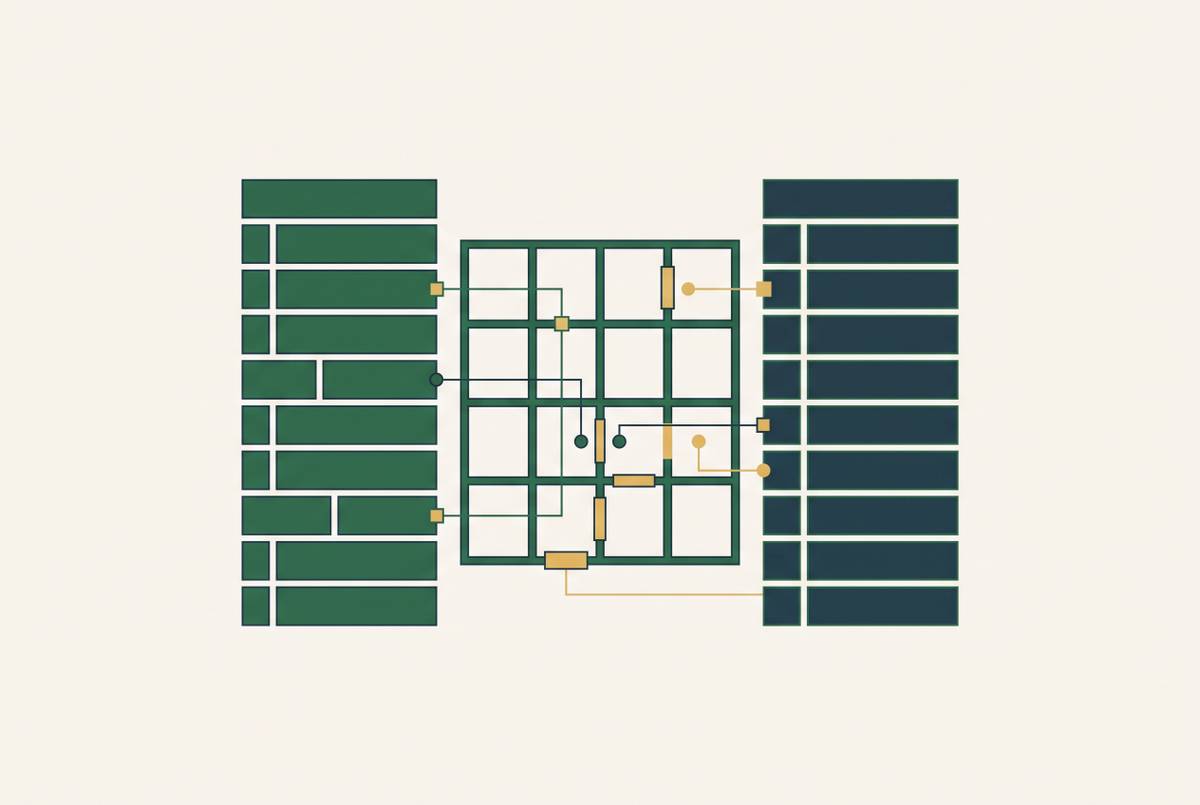
Most shops default to bids-per-week as their throughput number because it's easy to count. But bids-per-week doesn't tell you whether those bids were accurate, whether they took twice as long as they should have, or whether the estimator burned four extra hours chasing a superseded hardware schedule. Division 8 work makes this worse than it would be in most trades, because a single commercial project asks the estimator to reconcile a door schedule, the hardware groups spelled out in section 08 71 00, architectural drawings, partition schedules, and the project specs, all at once, not in sequence. That simultaneous reconciliation requirement is the reason a composite metric matters here more than it might in a trade where the takeoff is closer to a single measurement task.
The document set as the primary throughput constraint
The document set is where DFH throughput actually gets constrained. Start with the door schedule. That's not a training gap. It's a structural feature of how Division 8 documents get produced and revised across a project timeline.
The failure points are specific and they recur. A hardware set calls for a mortise lockset, but the door shows up prepped for cylindrical, a coordination failure that nobody catches at bid time because the schedule and the hardware group were never cross-checked line by line, only discovered once the door's already on site. An estimator prices against a hardware schedule revision that got superseded weeks earlier and has no way of knowing it, short of comparing revision dates against the spec issue log.
Then there's the scope boundary issue at the edges between Division 8 and its neighbors. Division 28, electronic safety and security, and Division 10 each carry pieces of an electrified opening: wiring, power supplies, device supply, and none of it is reliably assigned to one trade with a clean line drawn around it. Long-lead items make the timeline worse on top of the inaccurate estimates. Custom hollow metal frames, fire-rated assemblies, electrified hardware, commercial wood doors, and specialty hardware all need to be flagged early, and a shop that identifies them late doesn't just miss a deadline, it creates a procurement bottleneck that stretches the effective cycle time well past the date the bid actually went out. These documents get worked one at a time instead of together, so conflicts between them go undetected until it's too late to fix them cheaply. The door schedule is the starting point, but it cannot be read in isolation. CDF Distributors states that every opening must be cross-checked against the hardware groups in 08 71 00, the fire-rating requirements on the architectural plans, and the frame prep details. Estimators often treat "Similar to Set 3" notations as identical, when differences are the whole point of the designation.
Measuring openings-per-labor-hour: setting a baseline and using it
Openings-per-labor-hour is the cleanest of the three metrics to define and the easiest to get wrong in practice. The calculation itself is simple: total openings quoted in a period, divided by total estimating labor-hours in that same period. Most shops don't have this number because they don't log estimating hours as their own category, separate from project management, submittal chasing, and everything else that eats an estimator's day. Getting a real baseline means fixing that logging gap first, before anything else.
There's no published industry benchmark to measure against here, and chasing one is a waste of time. The value in this metric isn't comparison to some outside number; it's the shape of a shop's own trendline over time. A single aggregate average, though, will hide more than it shows. Openings-per-hour on a straightforward office building with repeating hardware groups is going to run well ahead of the rate on a hospital job loaded with behavioral health units and electrified assemblies, and blending those two into one number just tells you the average speed of two very different jobs, not where the actual drag is.
Segmenting the baseline is where the metric starts doing real work. Split standard commercial from institutional work (universities, hospitals, government), because institutional jobs carry owner-standard hardware requirements that force extra lookup and matching before an opening can even be quoted. Split hardware groups with electrified components from purely mechanical ones, since electrified openings mean cross-checking Division 28 boundaries on every single door they touch. And split new construction from renovation, because renovation drawings routinely arrive without a complete door schedule, leaving the estimator to piece one together from whatever partial documents exist. Once a shop tracks these cuts separately, an improving trend should show the rate climbing as templates, owner-standard libraries, and small process fixes build up over time. A flat or falling rate, even while bid volume grows, means the shop is just adding labor to keep pace, gaining no process leverage.
Measuring bid cycle time: where the clock starts and stops
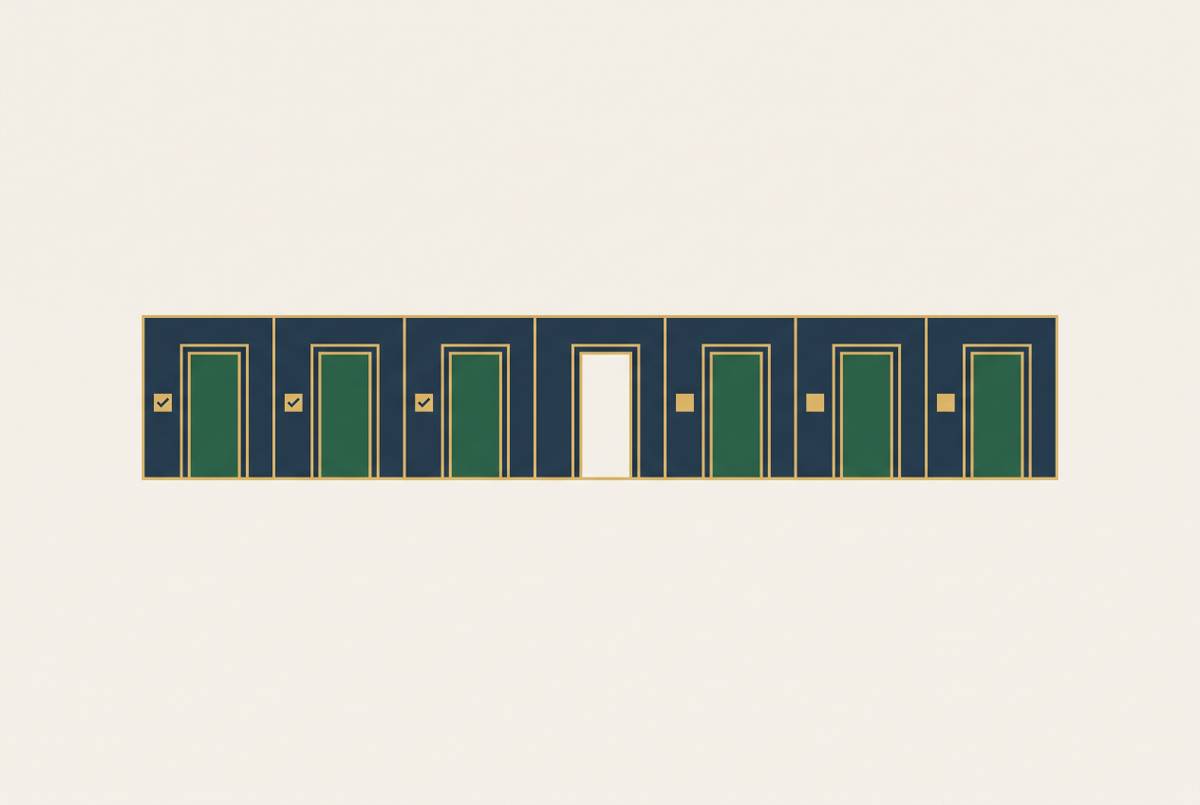
Most shops that measure cycle time start the clock in the wrong place. They mark the start when the estimator actually opens the file and begins working, not when the document package first arrives, and the gap between those two moments, the time sitting in queue, is often exactly where capacity disappears without anyone noticing.
A defensible definition fixes both ends of the clock. Cycle time starts at the date and time the complete document set arrives, meaning the door schedule, the 08 71 00 spec, and the architectural drawings together, not whichever piece is delivered first. It ends at the date and time the bid goes out to the GC or the owner. Tracked this way, queue time (documents sitting untouched) and active working time become two separate numbers, and they respond to two completely different fixes. Queue time is a staffing and prioritization problem. Active working time is a process problem.
The drivers specific to Division 8 work are. An incomplete package, a spec that arrives without its door schedule, or drawings missing fire-rating annotations, forces a stop-and-request cycle that can tack days onto a bid before any pricing work even starts. Building a single consolidated hardware submittal, rather than sending pieces out as they get finished, keeps active hours per bid lower than the piecemeal approach does. Finally, cycle time needs to be tracked by project size, separating jobs under some threshold opening count from larger ones. Small jobs should clear the process in a fraction of the time a large one takes; if they don't, the fixed overhead of RFI management, document organization, and scope matrix setup is landing disproportionately hard on bids too small to absorb it. Spec-schedule conflicts require RFIs to resolve before hardware can be priced; per the LinkedIn Division 8 spec overview, a poorly coordinated spec generates RFIs and change orders that extend the live bid cycle.
Measuring error-rework rate: the metric that exposes what speed is hiding
Rework rate is the metric that keeps the other two honest, and it needs a broad definition to do that job properly: any correction to a submitted bid, quote, or submittal that requires estimating labor after the original submission, including the post-award fixes that trace back to a spec-schedule conflict nobody caught at bid time.
Breaking rework into categories makes the number actionable instead of just alarming. Missed openings, doors visible in the drawings or floor plan that never made it onto the door schedule and slipped through takeoff unnoticed. Hardware set mismatches, either the wrong group assigned outright or a group priced from a schedule revision that had already been superseded. Scope boundary errors where items in Division 28 or Division 10 were included in or excluded from the Division 8 quote without basis. Fire-rating conflicts, hardware priced without the intumescent seals, automatic door bottoms, or bearing hinges the rated assembly actually requires. And scope boundary errors, items that landed in or fell out of the Division 8 quote at the Division 28 or Division 10 line with no real basis for the call, the hardest rework category to defend once a change order is on the table.
Cycle time and rework rate move against each other more often than shops expect, and that relationship is itself diagnostic. Cut review steps to move a bid faster, and rework tends to climb right along with the speed gain; the two metrics act as a pressure gauge on each other, and tracking them side by side is what reveals whether a speed improvement is real or just borrowed against post-award labor. Institutional work raises the stakes on this further. Owner-standard specifications at universities and hospitals carry hardware requirements that the project spec alone won't tell you about. An estimator who doesn't know that requirement, or a hospital's particular cycle-rating standard, prices the wrong product and finds out only after the correction is already required. Institutional projects amplify rework risk: owner-standard specifications at universities and hospitals introduce hardware requirements that project specs alone don't capture (an estimator unfamiliar with a university's sole-source cylinder requirement, as at UGA Athens Campus, where Best Access Systems cylinders have blanket sole-source approval and contractors must pay Best Access Systems directly as part of the Cost of the Work, or a hospital's cycle-rating standard will price the wrong product and require correction after award).
How the three metrics interact
Tracking all three metrics reveals one of four diagnostic profiles a shop might find. High volume, fast cycle time, high rework rate: speed here is being bought by skipping reconciliation steps, and the shop is effectively borrowing capacity against labor it'll have to spend later, after award. High volume, slow cycle time, low rework rate: the process is careful and the work is solid, but it isn't leveraged, and there's real capacity sitting unused, waiting on a fix to how documents get handled rather than a fix to accuracy. Low volume, slow cycle time, low rework rate: thorough, but boxed in. Every bid still gets built from scratch, with no advantage carried over from the last similar job.
The single most useful signal in this whole framework is how rework rate behaves as openings-per-labor-hour rises. If rework holds flat or improves while volume climbs, the shop has built real process leverage, templates and owner-standard libraries doing actual work. If rework climbs in step with volume, whatever looked like leverage was an illusion, and the shop was just working faster without working smarter. Cycle time tells a related but separate story over time: it should trend downward as a shop builds up familiarity with recurring owner standards and hardware package structures, since a shop that has already quoted one university campus project should move noticeably faster on the next job from that same owner, the sole-source and owner-standard lookup work having already been done once.
What the numbers should prompt a shop to change
A high rework rate points to the reconciliation step itself, and the shop needs a structured cross-check between the door schedule, the hardware groups, and the architectural drawings built into the process before submission, not discovered as a correction after. Slow cycle time driven by queue time is a workflow and staffing problem, not a document complexity problem, and it needs less time between when documents land and when active work actually starts. Slow cycle time driven by active working time points to the sequential, document-by-document approach itself, the constant back-and-forth between schedule, spec, and drawings that a simultaneous cross-check would eliminate. And a flat openings-per-hour rate despite rising volume means the shop is adding labor instead of gaining process leverage, exactly the spot where fixing the reconciliation and takeoff step pays off the most.
Some fixes are close to free. A long-lead log, run as a standard part of every bid rather than a separate project management chore, pulls procurement-critical decisions out of the hardware pricing workflow and compresses effective cycle time directly. Scope matrices for the Division 28 and Division 10 intersections, built at bid time instead of reconstructed after a dispute, cut down the rework category that's hardest to win an argument over once a change order is already on the table.
None of it works, though, without the measurement discipline that separates queue time, active working time, and rework into distinct, trackable numbers. A shop that isn't tracking these three dimensions separately has no way to tell a throughput problem it actually solved from one it simply stopped noticing. That distinction is the whole value of the framework: it's not just what gets measured, but that measuring it at all is what makes every other fix visible.